
For Maegan Quiazon, understanding the world has never been limited to words alone. An artist, student, and aspiring psychologist, she has found meaning not just in what people say but in what they feel, observe, and sometimes struggle to express. Through her creativity and empathy, Maegan is learning how to bridge that gap, turning both personal experience and global challenges into something visible, understandable, and deeply human.
Maegan’s story begins with movement. Her family immigrated to the United States from the Philippines when she was just two years old. Though her memories of her birthplace are faint, that early transition shaped the environment in which she grew up, one defined by adaptation, growth, and quiet resilience. Now a high school student, she is enrolled in a gifted art program, where she has found not only a passion, but also a voice.
Art, for Maegan, is more than a hobby; it is a language. As a child, she often found it difficult to articulate her thoughts and emotions through words. Drawing became a way to process and communicate what she could not easily say aloud. Whether through sketching, embroidery, or designing patches, she discovered that creativity allowed her to express complex feelings with clarity and honesty. “Sometimes words don’t come out the way I want them to,” she reflects, “but art helps me put it out there in a way that feels right.”
Her interests extend far beyond the canvas. Maegan describes herself as someone drawn to “anything artsy,” but she is equally fascinated by science, particularly environmental science and psychology. Classes like Earth Science and AP Environmental Science opened her eyes to the interconnected systems that shape the planet, while her curiosity about human behavior led her toward a future in psychology. She is especially interested in understanding how people think, feel, and respond to the world around them, and how that understanding can be used to help others.
That desire to help is central to who she is. When asked about her greatest accomplishment, she doesn’t point to awards or achievements. Instead, she speaks about being there for others, about creating a space where people feel safe, heard, and understood. “Knowing that I can be that person for someone,” she says, “that makes me really proud.”
Much of that perspective has been shaped by the people around her. Teachers, in particular, have played an important role in her life not just as educators, but as mentors who modeled kindness and understanding. Alongside them stands her older sister, whose work ethic and determination continue to inspire Maegan to push beyond her limits.
This blend of empathy, curiosity, and creativity is what ultimately shaped Maegan’s submission to the ChallengeUS competition. Her piece, rooted in both memory and observation, reflects a formative moment from her childhood. In elementary school, a hands-on classroom demonstration about watersheds and runoff changed the way she saw the environment. Using a physical model of a landscape, her teacher showed how pollutants like fertilizer, trash, and sediment travel through water systems. What once seemed abstract suddenly became real.
“That’s when it clicked,” Maegan recalls. “I could actually see it happening.” That moment of clarity stayed with her. Over time, she began noticing the small, often overlooked ways human actions impact the environment. Her artwork captures this realization through a striking visual: a large figure looming over a miniature world, watching as environmental damage unfolds below. The contrast in scale is intentional. It reflects a powerful truth that humans, collectively, have an enormous influence over the planet.
“We are that big force,” she explains. “We can do so much good or so much bad. It depends on what we choose to do.” She emphasizes that climate change is not just a distant or abstract issue; it is shaped by everyday actions, many of which people don’t fully understand. This is where she believes art plays a crucial role. While data and statistics are essential, they can feel distant or overwhelming. Art, on the other hand, makes the issue tangible. “Numbers can be hard to connect with,” she says. “But when you can see something, when it’s visual, it becomes easier to understand.”
For Maegan, the goal of her work is not just to inform, but to inspire action. She hopes that viewers of her submission walk away with a greater willingness to learn, to move past fear or indifference, and become more open to understanding climate change and its impacts. In her view, one of the biggest barriers to progress is not lack of care, but lack of awareness.
This belief aligns closely with her perspective on youth voices. She sees her generation as uniquely positioned to speak on the challenges of today because they are living through them in real time. From global events like the COVID-19 pandemic to the ongoing climate crisis, young people are not just observers; they are participants. Their insights, she argues, are essential.
“We’re experiencing these things firsthand,” she says. “People need to hear how it affects us.”
Through the process of creating her submission, Maegan also discovered something about herself: that her voice matters. Even in a world where youth perspectives are sometimes dismissed, she believes strongly that her generation is thoughtful, aware, and eager to create change. “We care,” she emphasizes. “Even if it doesn’t always look like it.”
Looking ahead, Maegan hopes to carry that mindset into a future in psychology, where she can continue helping others on a deeper level. Whether through art, conversation, or professional work, her goal remains the same: to understand people and to support them. At her core, Maegan’s story is about connection: between people, between ideas, and between action and understanding. It is about recognizing both the power and responsibility we hold, and choosing to use that power with intention.
When asked what advice she would give to other young people, her answer is simple, but deeply meaningful: Be open. Be willing to learn. Knowledge, she believes, is what allows people to grow, to act, and to make a difference. “Once you understand something,” she says, “you can go farther than you think.”
In a world that often feels overwhelming, Maegan’s perspective offers something steady, a reminder that change begins with awareness, and that even the smallest shifts in understanding can lead to something much bigger.
See her Category-Winning submission here.
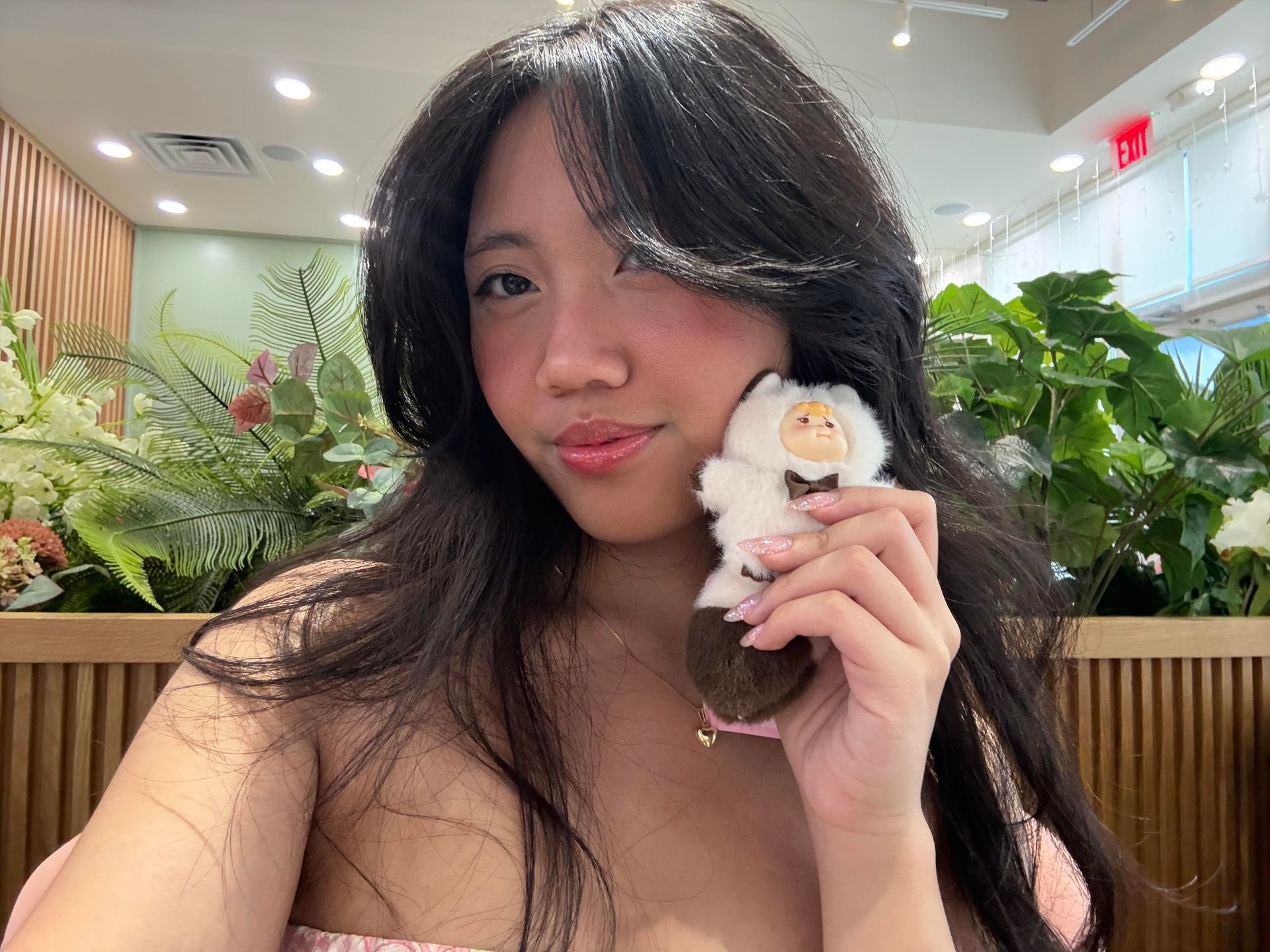
Maegan Quiazon, Art Category Winner — Climate Cardinals x ChallengeUS Future Leaders Competition
[Photo/Courtesy of Quiazon]
