
Gia Bao Kieu does not speak about climate change as a distant or abstract issue. For him, it is deeply personal, rooted in lived experience, loss, and resilience. Born in a remote area in northern Vietnam, his early life was shaped not only by geographic isolation but by the growing realities of a changing climate. When a devastating flood destroyed his family’s home, it forced them to rebuild their lives from nothing, an experience that would later define both his worldview and his purpose.
His story is not one of a single hometown, but of multiple beginnings.
After the flood, his family relocated to a lower-lying area, where they rebuilt everything from scratch. That place became what he calls his “second hometown,” where he spent most of his childhood and completed his primary and secondary education. Years later, driven by academic ambition and a desire to expand his impact, he moved to Hanoi, the capital of Vietnam, to pursue higher education. Today, he is a fourth-year English linguistics major at the Diplomatic Academy of Vietnam.
But beyond academics, he has cultivated a life defined by advocacy, creativity, and a deep commitment to social impact. From a young age, he demonstrated a wide range of personal interests. He enjoys playing chess, performing music, and exploring artistic expression. However, at the core of his identity lies a clear and powerful sense of purpose: to create meaningful change for those whose voices are often unheard.
His passion centers on climate change, youth empowerment, and women’s rights, particularly for those living in vulnerable or marginalized communities. Over time, this passion has translated into tangible action. He has participated in numerous international competitions and initiatives, earning recognition for his work and ideas. He has represented Vietnam in international forums in countries such as South Korea and Laos, where he spoke about climate change and its impacts. He has also contributed to projects focused on sustainable fashion and the preservation of traditional craftsmanship in rural Vietnam through his involvement with Empower Women Asia.
Despite these accomplishments, he does not define success by awards or recognition. Instead, he points to a moment from his teenage years as his most meaningful achievement. When he was in 10th grade, he created a poster based on a photograph he had taken of a haunting image of a mother and child stranded on a rooftop during a flood, waiting for rescue that never came. The two eventually died after days without food or support, a tragedy that reflected the harsh realities faced by many in vulnerable communities. Deeply affected by their story, he shared the image and accompanying message on social media, hoping to raise awareness.
What happened next exceeded his expectations. Local authorities noticed the impact of his post and reached out to him. They decided to print and distribute his poster widely, displaying it across public spaces. More importantly, the campaign led to tangible action: increased donations, improved infrastructure, and greater support for communities at risk of future disasters. For him, this was a turning point not just because his work was recognized, but because it resulted in real change.
“That was when I realized,” he reflects, “that storytelling can move people to act.” This experience also reinforced one of his core beliefs: that awareness alone is not enough. Throughout his work, he has become increasingly critical of what he sees as a common but ineffective approach to activism: the vague call to “raise awareness.” While he acknowledges its importance, he argues that it often lacks specificity and accountability. In his view, real change requires clear actions, targeted solutions, and a willingness to address root causes.
“It’s too general,” he explains. “People say we should raise awareness, but they don’t say what we should actually do.” Instead, he focuses on amplifying specific stories and connecting them to actionable outcomes. Through blog writing, interviews, and public engagement, he works to highlight the lived experiences of those affected by climate change, particularly individuals in rural and low-income communities. His goal is not just to inform, but to shift perspectives and inspire concrete responses.
Underlying this work is a deeply personal understanding of climate injustice. Having witnessed the destruction of his own home and the loss of lives in his community, he is acutely aware of the unequal burden climate change places on different populations. Farmers, for example, often depend entirely on weather conditions for their livelihoods, yet have little control over the forces that disrupt them. When disasters occur, these individuals frequently blame themselves, believing they failed to prepare adequately.
He finds this mindset both common and deeply troubling. “They think it’s their fault,” he says. “But it’s not.” For him, one of the most dangerous aspects of climate change is not just the physical destruction it causes, but the normalization of that destruction. This acceptance, he argues, prevents meaningful action and allows systemic issues to persist.
In response, he has embraced what he calls a “refusal of silence.” This philosophy guides his approach to advocacy. Rather than accepting harmful narratives or remaining passive, he actively seeks out stories, shares them on broader platforms, and challenges misconceptions. Even when individuals are not ready to speak out for themselves, he takes on the responsibility of amplifying their voices, ensuring that their experiences are seen and acknowledged.
At the same time, he recognizes that change must extend beyond individual action to systemic reform. For him, a “climate-just” Vietnam is one where policies are not only equal but equitable. He points out that current approaches often distribute resources evenly, without considering differing levels of need. As a result, wealthier individuals can recover more easily, while poorer communities remain vulnerable.
True climate justice, he argues, requires targeted support—investments in stronger infrastructure, inclusive policymaking, and educational initiatives that empower communities with knowledge and agency. Education, in particular, plays a critical role in shifting mindsets and breaking cycles of misinformation.“People need to understand what’s happening,” he says. “Only then can they take action.”
Despite the challenges he has faced, he remains hopeful about the role of youth in shaping the future. He believes that young people bring fresh perspectives, adaptability, and a willingness to challenge outdated systems. However, he also emphasizes the importance of collaboration between generations. “Youth have ideas,” he explains, “and if adults listen, we can create better solutions together.”
As he looks to the future, he envisions himself in roles that allow him to influence policy and connect communities, whether as an environmental leader, a government official, or a diplomat. Regardless of the path he chooses, his goal remains the same: to improve the lives of those most affected by climate change and to ensure that their voices are no longer ignored.
In the end, his message to other young people is simple, yet powerful: Be yourself. Be confident. And do not be afraid of making mistakes. Because, as he believes, it is through those mistakes and the courage to learn from them that true growth and unexpected opportunities emerge.
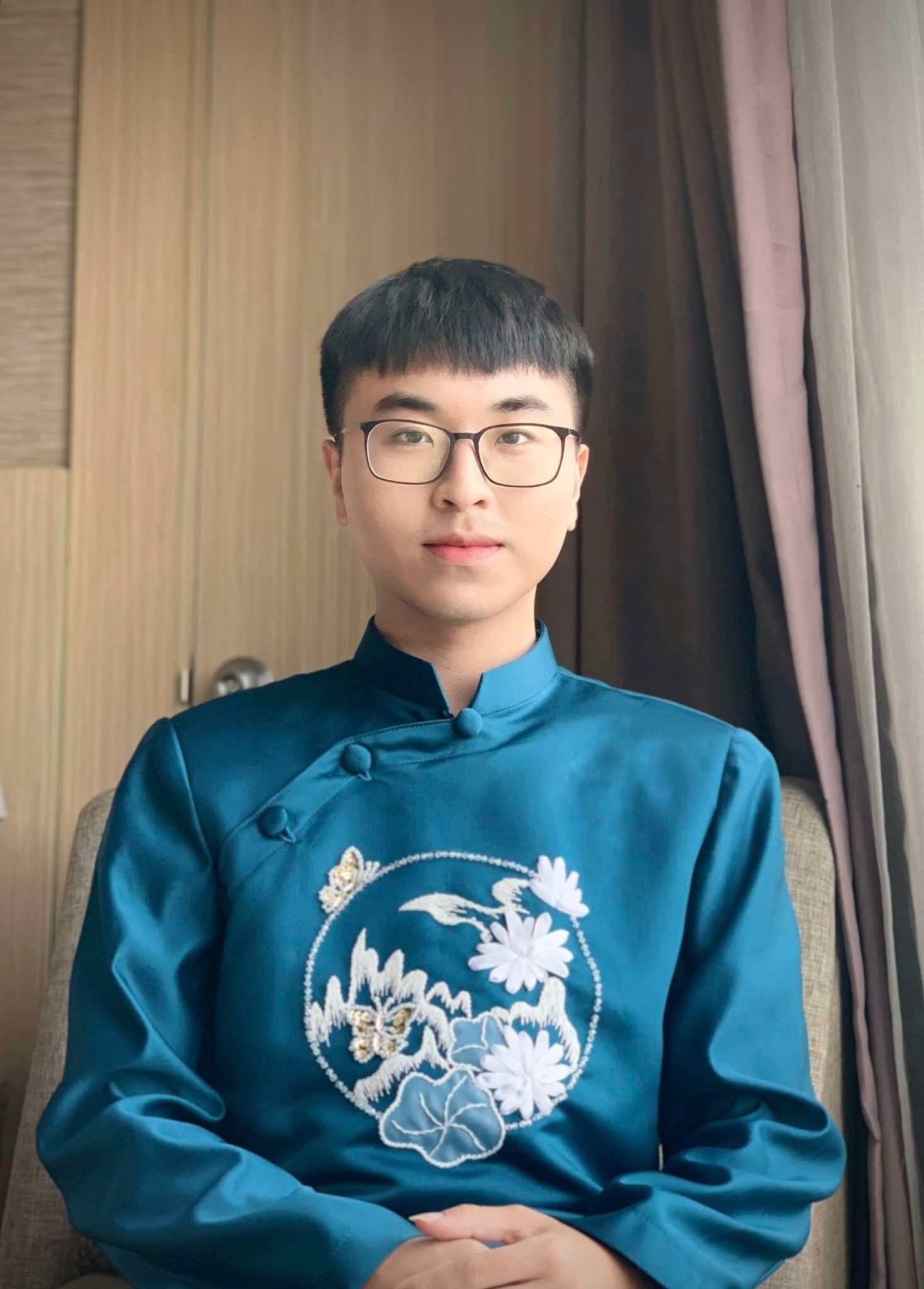
Gia Bao Kieu, Grand Prize Winner — Climate Cardinals x ChallengeUS Future Leaders Competition
[Photo/Courtesy of Kieu]
