
For Jerhan Duran, understanding the world has never been about looking at a single issue in isolation. It has always been about connections between people, systems, and ideas that are often treated as separate but are, in reality, deeply intertwined. As a student, writer, and emerging voice in climate discourse, Jerhan is driven not just by a desire to inform but by a commitment to reframe how we think, speak, and act on the world’s most pressing challenges.
Jerhan’s journey spans places, cultures, and perspectives. Having grown up between Doha and Davao City, his understanding of the world has been shaped by both mobility and contrast. Among his most vivid childhood memories is a wide stretch of black sand beach in his hometown, a place defined by openness, play, and a sense of permanence. But that permanence proved fragile. When he returned years later, the shoreline had disappeared, replaced by a seawall. What had once been a space of childhood wonder had been overtaken by the slow but relentless advance of the sea.
That moment was more than just a personal loss; it was a realization. “The sea had begun to eat the coastline,” he recalls, echoing what local fishermen had told him. It was a striking example of climate change made visible. Yet, for Jerhan, the urgency of the crisis extends far beyond singular events. Living in the Philippines, he has come to recognize climate change not as a distant or abstract threat, but as something embedded in daily life, in the unpredictable shifts between intense heat and sudden rainfall, in the quiet disruptions that accumulate over time.
What truly transformed Jerhan’s understanding of climate change was not just what he saw; it was how he began to think about it. As an active consumer of digital media, he encountered perspectives that connected environmental issues to broader global dynamics, particularly conflict. Through social media platforms and coverage from international outlets, he began to see how war, destruction, and environmental degradation are not separate crises, but overlapping realities.
“That’s when I found a deeper perspective,” he explains. Climate change, in his view, is not just about emissions or rising temperatures; it is about systems of power, displacement, and human relationships. This realization became the foundation of his intellectual and creative work.
Jerhan’s interest in writing did not emerge overnight. In fact, for much of his early academic life, writing was simply a skill, something he knew how to do, but had not yet fully explored. That changed when he participated in the John Locke Global Essay Prize, where he received a High Commendation in the philosophy category. While the recognition itself was significant, its true impact lay in what followed.
“That was the spark,” Jerhan reflects. The experience pushed him to take writing seriously, not just as an academic exercise, but as a tool for inquiry and expression. From there, he began entering more competitions, joining organizations, and eventually becoming a feature writer for his school publication. Through journalism, he learned to expand his voice, blending analytical thinking with creative storytelling.
“It taught me to see issues from the perspective of those who are directly affected,” he says. That lesson now underpins much of his work, particularly his critique of how climate change is reported and discussed. In his ChallengeUS submission, Jerhan argues that mainstream climate coverage often sidelines what he calls “consequential voices,” those from disadvantaged, Indigenous, and marginalized communities. Contrary to the assumption that these groups lack representation, Jerhan suggests the issue lies deeper: in how they are perceived and engaged.
“They’re treated as special cases,” he explains, “instead of equal stakeholders.” This dynamic, he argues, reflects a broader lack of dignity in how these communities are included in climate discourse. Rather than being active participants in shaping solutions, they are often expected to accept externally imposed agendas. Jerhan also introduces the concept of a “culture of animosity” to describe the current state of many activist movements. In this culture, dialogue is replaced by confrontation, and the goal shifts from solving problems to winning arguments. While he acknowledges the importance of identifying issues, he believes that an overemphasis on conflict can hinder meaningful progress.
“The movement becomes problem-centric rather than solution-centric,” he says. For Jerhan, the future of climate advocacy lies not in amplifying division but in fostering dialogue and collaboration. This belief extends to his views on journalism. He sees media not just as a platform for reporting, but as a stabilizing force, one that can bridge divides and elevate nuanced perspectives. Among the various forms of media, he identifies youth-led publications as particularly promising. Free from many of the constraints that shape mainstream outlets, these platforms offer space for authenticity, experimentation, and a genuine commitment to truth.
“Youth writers are writing about the world they’re going to inherit,” he notes. “That gives them a different kind of responsibility.” At the heart of Jerhan’s work is a desire to shift the narrative, from one that focuses on isolated problems to one that emphasizes interconnected solutions. He envisions a future where climate reporting goes beyond simplified stories of victims and perpetrators, instead addressing the systemic displacement of people, livelihoods, and dignity. His ambitions reflect this vision. Aspiring to become a diplomat and peacekeeper within the United Nations, Jerhan hopes to bring a resolution-driven mindset to global discourse. He believes that journalists and policymakers alike can learn from diplomacy, particularly the importance of negotiation, empathy, and long-term thinking.
“Climate change doesn’t just kill,” he explains. “It displaces people from environments where they thrive.” Addressing that displacement, he argues, requires a deeper understanding of both environmental and social systems. Through his writing and reflections, Jerhan has also come to a personal realization: that addressing climate change ultimately requires addressing human behavior. “It’s about relationships,” he says. “How we interact with each other.” For him, solutions begin not just with policy, but with perspective and the willingness to question, to listen, and to engage.
This philosophy is perhaps best captured in his thoughts on youth voices. “When we elevate a student’s voice,” he explains, “we’re not just amplifying it. We’re helping it grow.” That growth, he believes, depends on curiosity.
When asked what advice he would give to other young people, Jerhan’s answer is both thoughtful and energizing: Be curious of everything, everywhere, every time. Not just open-minded, but actively curious. Approach every idea, every perspective, as if it were an undiscovered land waiting to be explored. Question it, learn from it, and let it shape you. And with a touch of humor, he adds: “They say curiosity killed the cat—but it won’t kill you. Otherwise, you wouldn’t be here, sharing your voice with the world.”For Jerhan, curiosity is as much a pathway as it is a mindset. A way to move beyond division, beyond assumption, and toward a more thoughtful, connected, and solution-driven world.
Read his Category-Winning submission here.
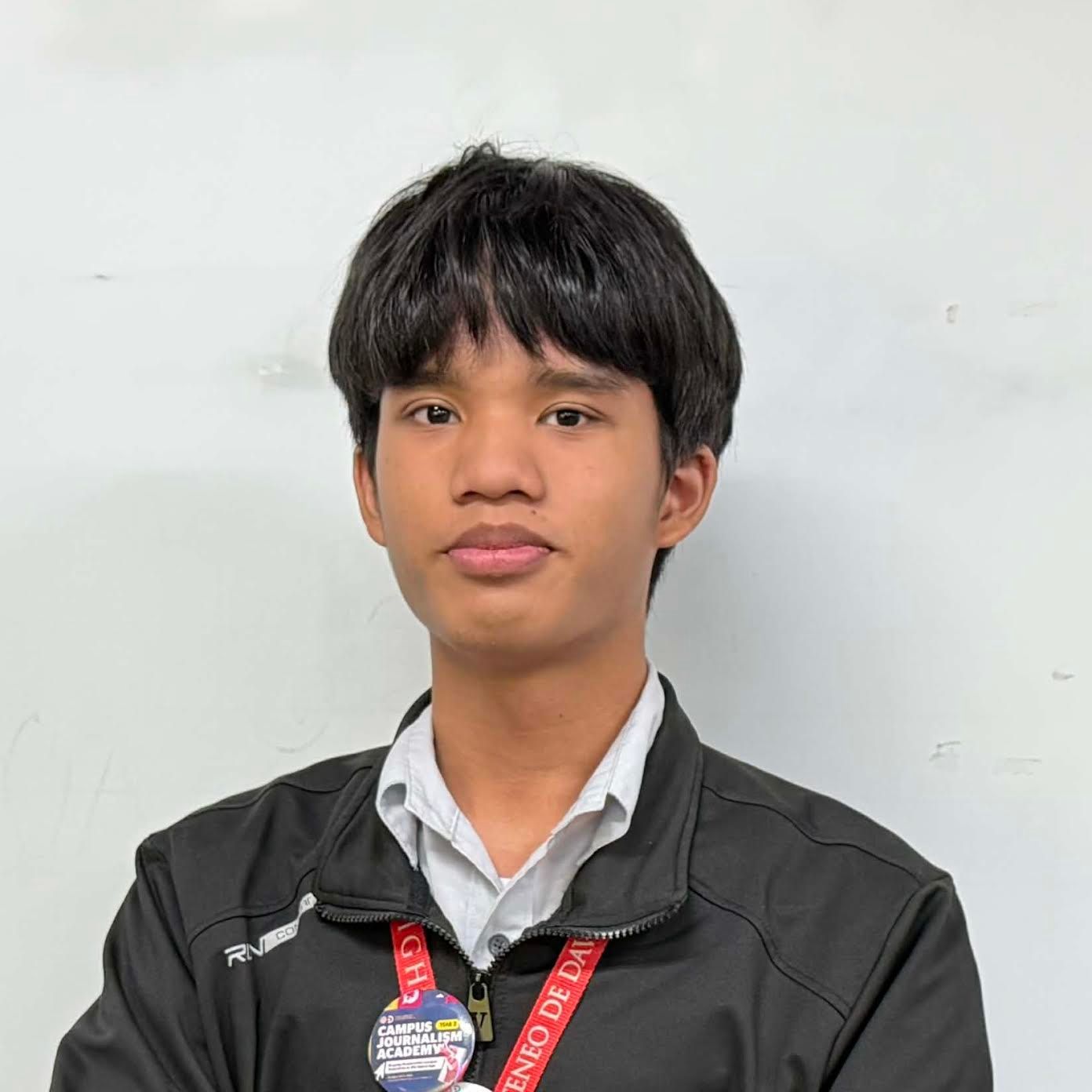
Jerhan Duran, Analytical Writing Category Winner — Climate Cardinals x ChallengeUS Future Leaders Competition
[Photo/Courtesy of Duran]
