
Jihyun Ko’s story is defined by transformation that spans continents, cultures, and ways of thinking. Born and raised in South Korea before moving to Michigan as a teenager, Ko’s journey reflects a shift not just in geography, but in mindset: from passive participation to active engagement, and from quiet observation to purposeful advocacy.
She spent the first thirteen years of her life in South Korea, where education was structured and largely centered on academic achievement within the classroom. Environmental sustainability, while present in the curriculum, was treated as something to understand rather than something to act upon. It was knowledge to internalize, not a call to action.
That began to change when she moved to Michigan three years ago, alone and without her parents, to attend high school. In her new environment, she encountered something she hadn’t experienced before: youth actively organizing, advocating, and engaging with real-world issues. Students weren’t just preparing for the future; they were participating in it. This realization marked a turning point. “I was able to see that students aren’t just people preparing to do great things,” she reflects. “They’re already capable of doing great things now.”
That shift in perspective sparked her involvement in advocacy work, particularly in education and environmental justice. She became engaged with organizations focused on improving public school systems, addressing inequities in funding, and expanding mental health resources for students. Her work is rooted in a belief that young people deserve not only a voice, but a meaningful role in shaping the systems that affect them.
One defining moment occurred when she was around twelve or thirteen years old, still living in South Korea. She found herself caught in a flash flood while walking home at night. As the water rose rapidly around her, she was forced to take shelter in a nearby building for hours, waiting for conditions to stabilize. The experience was frightening, immediate, and undeniable. Until then, climate change had felt abstract, distant, and difficult to grasp. But in that moment, it became tangible. “That was when I realized how severe this issue is,” she says. “It’s not just theoretical. It’s something that directly affects people’s lives.”
That realization stayed with her, shaping both her academic interests and her advocacy efforts. In Michigan, she began focusing on local environmental issues, particularly water quality and infrastructure concerns like pipeline systems in the Great Lakes region. What stood out to her was not just the environmental impact, but the social dimensions.
Again and again, she observed a troubling pattern: the people most vulnerable to environmental harm are often those with the least visibility and the least influence. In South Korea, she recalls, low-income families often live in semi-basement housing that is particularly susceptible to flooding. Elderly individuals in rural areas face heightened risks from natural disasters. These are the individuals most likely to experience the direct consequences of climate change, yet least likely to shape the policies addressing it.
This insight became central to her work and writing. For her, climate change is not just an environmental issue but a systemic one. Decisions about infrastructure, industry, and environmental policy are often made by those insulated from their consequences, while marginalized communities bear the burden. “It’s frustrating,” she admits. “The people most affected often don’t have the decision-making power.”
In response, she has embraced a form of advocacy that is both local and actionable. Rather than focusing solely on broad awareness campaigns, she emphasizes the importance of specific, measurable actions such as organizing around particular policies, engaging with local stakeholders, and creating opportunities for direct community involvement. Her experience in Michigan has reinforced this approach. She notes that grassroots organizations, particularly smaller, community-based groups, offer more accessible entry points for youth participation. Unlike large, national institutions, these groups allow individuals, regardless of age, to contribute meaningfully to decision-making processes. This bottom-up structure, she believes, is essential for fostering genuine engagement and driving tangible change.
Perhaps her greatest accomplishment, she says, is not a specific achievement, but a transformation in mindset. She has moved from seeing herself as a passive participant in systems to recognizing her role as an active contributor. Central to this growth is a value she holds deeply: adaptability. “Being ready to expand your perspectives is so important,” she explains. “What you’re familiar with isn’t always the full picture.”
Looking ahead, she envisions a future where her advocacy is complemented by technical expertise. She wants to deepen her understanding of environmental systems so that her work is not only persuasive, but authoritatively grounded in both lived experience and scientific knowledge. Her ultimate goal is not to solve global issues in isolation, but to address them through local action. She believes that meaningful change begins when communities identify specific challenges, engage directly with those affected, and develop targeted solutions. Whether addressing food insecurity, educational inequity, or environmental degradation, her focus remains on translating large-scale problems into actionable steps.
Throughout her journey, one theme remains constant: the importance of youth voices. She is acutely aware of the barriers young people face—limited political power, lack of recognition, and assumptions about their inexperience. Yet she also sees immense potential. Youth bring urgency, creativity, and a willingness to challenge the status quo. “It’s important that we find ways for youth voices to be heard,” she says. “Because we’re already experiencing these issues.”
As she reflects on her experiences and the path ahead, she offers a piece of advice to other young people, one that captures the essence of her journey: Passion is not something you simply discover; it is something you build. Rather than waiting for clarity, she encourages youth to explore widely, engage deeply, and remain curious. Through exposure to different ideas, challenges, and opportunities, individuals begin to uncover what truly matters to them.
“There’s so much to learn and so much to do,” she says. “Youth is the perfect time to be active—and the perfect time to keep learning.” In that spirit, her story stands not just as a personal narrative, but as an invitation: to pay attention, to take initiative, and to believe that meaningful change can begin now.
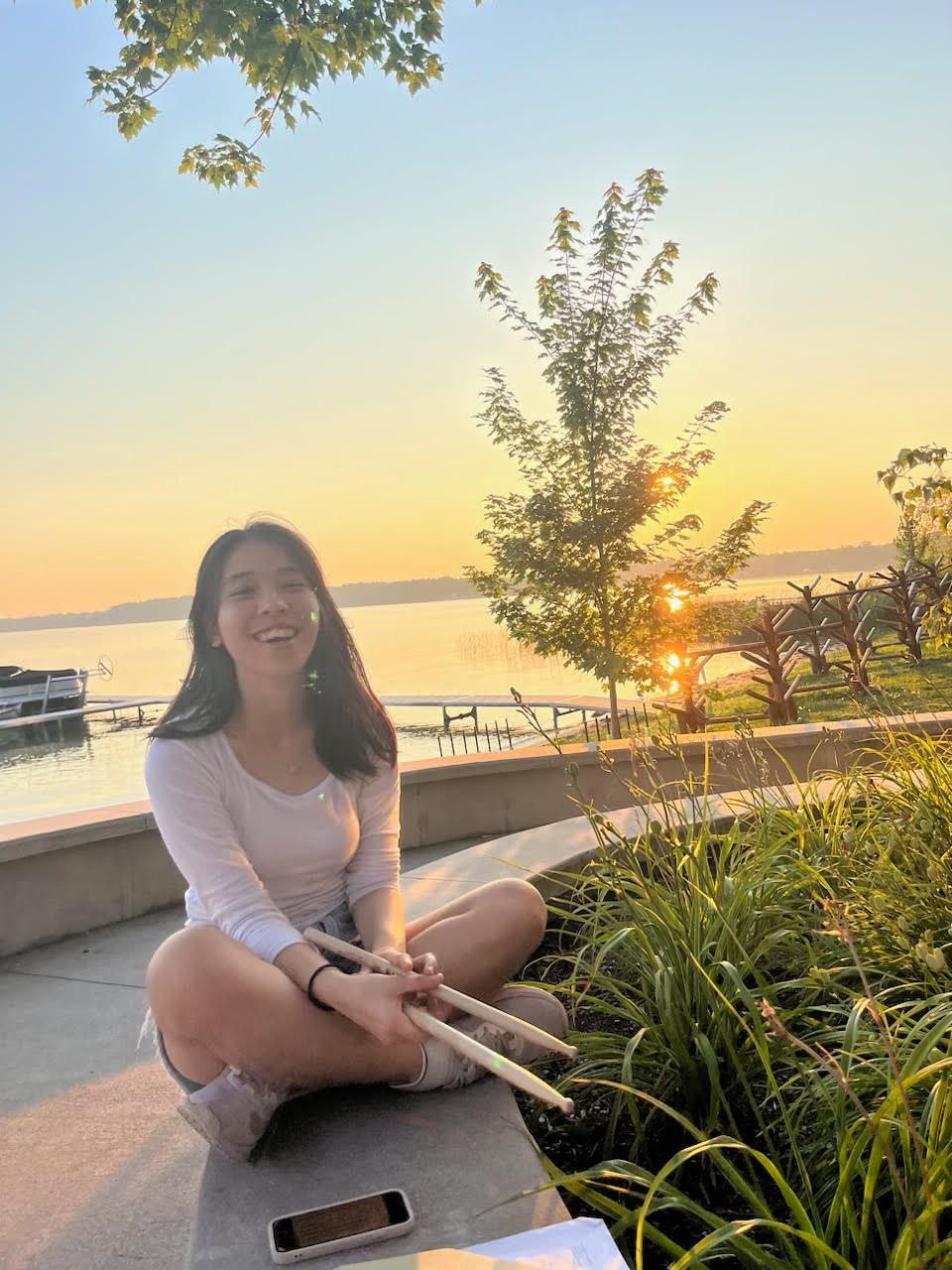
Jihyun Ko, Creative Writing Category Winner — Climate Cardinals x ChallengeUS Future Leaders Competition
[Photo/Courtesy of Marat]
